ReAD THE fORWARD

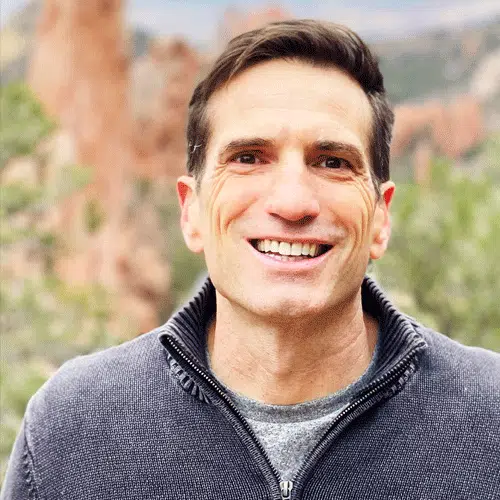
Jedd Medefind is the President of the Christian Alliance for Orphans.


Previously, he served as Special Assistant to President George W. Bush and Acting Director of the White House Office of Faith-Based and Community Initiatives. Jedd wrote the Foreword to the Journey of the Fatherless and said Journey to the Fatherless will not leave us or the world unchanged.


(March 30, 2012) When Larry Bergeron asked if I’d write the foreword to his book, Journey to the Fatherless I knew immediately I’d say “yes.”  I hadn’t yet read the book, but I knew Larry.  His years of faithful labor for orphans, his servants’ heart that seems not to care who gets the credit as long as the job gets done, the blend of strength and gentleness in the way he leads — all make him the kind of man I want to learn from.


Perhaps what had impressed me most is the way I’ve seen Larry work to grow the orphan care movement through the Alliance with little concern for whether his organization gets ample “visibility” or “payback” as a result of the efforts.  His focus is not only his own little kingdom, but on the Kingdom.  (The organization Larry leads, A Child’s Hope International, marshaled the armies of volunteers that prepared and shipped the thousands of food packets for “The Orphan’s Table” for Orphan Sunday 2011 – all at no cost to the Alliance.)

To Larry’s joy—and mine, too—Larry’s book has finally arrived.  From the beautiful cover to the rich and practical substance, it’s yet another first rate contribution from Larry to the growing orphan care movement.  I suspect it will be put to great use over the years ahead—from pastors preparing for sermons to small group discussions to guidance for leaders of church orphan care ministries.  (It’s also worth noting there’s an accompanying Discussion Guide for small groups.  And, all proceeds will go to support the care of orphans.)


I’d encourage you to just get the book without further ado.  But if you want a sneak peak at the Foreword, here it is:


+++


On one level, a journey to the fatherless is much like any journey.  It begins with one small step, then another.  The outcomes, when they come, are mostly the by-product of long obedience in the same direction.  No triumphant soundtrack plays in the background, and the most significant victories often go unnoticed.  The experiences along the way are sometimes painful; sometimes just pedestrian.


But ultimately, this venture proves to be a pathway like no other, leading to a depth and purpose you just can’t find at a golf course or day spa.


I see over and over again a simple truth revealed by adoptive families, foster parents, and those sacrificially supporting and serving the fatherless worldwide:  love for orphans transforms.  A single caring individual can change the life of a child forever.  But it’s not only the orphan that is changed.  We also are altered.  Loving the orphan draws us from a slouching, self-focused religion to a vigorous, growing faith.  An entire church community can be elevated by seeing this played out in its midst.  From there, it spills to a watching world that can observe, perhaps for the first time, the Gospel story made visible.


Be warned.  The cost of any expedition worth making can be high.


I’ve encountered many once-vibrant idealists, from the U.N. to Christian ministry, who’ve yielded to disillusionment and cynicism.   For the need of our world’s orphans stretches wide as the Sahara desert.  Its statistics alone can leave us numb.   Meanwhile, the hurt and brokenness we encounter along the way are dizzying in their depth and complexity.   If motivated only by duty, guilt or idealism, we are unlikely to persevere.


There is but one source that can sustain us through this desert with hope and grace intact.  It is love.  Not love born merely from pity, but love rising in a wonder-filled response to a far greater Love:  the depth and width, length and breath of God’s self-giving heart.   This, and this alone, will carry us through the heat and sand and scorching wind of our world’s great hurt.


We see this love not only in that God has called us to “defend the cause of the fatherless,” but that He has defended us.  Not only that he directs us to “visit orphans in their distress,” but that he has visited us in ours.  Not only that He invites us to set the lonely in families, but that He set us in His.


Indeed, we love because He first loved us.


Supplied by this fountainhead, we can go the distance.  Even when the healing of an adopted child becomes a great struggle.  Even when the foster youth we’ve mentored is drawn back into the tragic cycle of her upbringing.   Even when every child rescued from the streets seems to be replaced by two more.  For we know that God’s relentless love continues after us, too.  And we see in whatever costs we bear but a humble reflection of the cost God bore to journey to us.


As we persevere, we discover the most wonderful truth of all.  Ultimately, a journey to the fatherless is a journey to the heart of God.


Larry Bergeron knows this from experience.  It sparkles in his eyes and glows in his daily work.  And through his words, he helps us prepare for this journey—a venture of unparallel difficulty and beauty that will not leave us or the world unchanged.


If that is your desire, venture on…

"Journey to the Fatherless will not leave us or the world unchanged."

– Jedd Medefind, President of Christian Alliance for Orphans

A Troubling Story

A Troubling Story

The orphan does not need the church as much as the church needs the orphan…

The orphan does not need the church as much as the church needs the orphan…

DOES THE CHURCH CARE FOR THE WORLD’S CHILDREN? Yes – some local churches do! The evidence on display however, tells a troubling story with an ever-increasing number of orphans in the world, kids aging out of foster care, AIDS babies in Africa, and toddlers in Haiti whose hair has turned orange from severe protein deficiencies. Given her wealth, talent, and worldwide resources, the Church can be a powerful agent of change—and she has the biblical mandate to do so.


Do Christians have a responsibility to intercede for and sacrifice their resources for vulnerable children? What happens to the Church when we do? And when we don’t? How do we begin?


The Journey to the Fatherless is written by a former agnostic, corporate executive and inventor who was chased down by the Hound of Heaven.


God then took him to the “fields of the fatherless” so he could experience what breaks the heart of God. What he discovered in serving the least of these has been captured for the Church to use to prepare others for their journey.


The Journey takes the reader beyond Fields of the Fatherless and The Hole in Our Gospel into a deeper understanding of the problem and the biblical call to action.


What may be a troubling story in the beginning turns out to be a story of glorious redemption!

DOES THE CHURCH CARE FOR THE WORLD’S CHILDREN? Yes – some local churches do! The evidence on display however, tells a troubling story with an ever-increasing number of orphans in the world, kids aging out of foster care, AIDS babies in Africa, and toddlers in Haiti whose hair has turned orange from severe protein deficiencies. Given her wealth, talent, and worldwide resources, the Church can be a powerful agent of change—and she has the biblical mandate to do so.


Do Christians have a responsibility to intercede for and sacrifice their resources for vulnerable children? What happens to the Church when we do? And when we don’t? How do we begin?


The Journey to the Fatherless is written by a former agnostic, corporate executive and inventor who was chased down by the Hound of Heaven.


God then took him to the “fields of the fatherless” so he could experience what breaks the heart of God. What he discovered in serving the least of these has been captured for the Church to use to prepare others for their journey.


The Journey takes the reader beyond Fields of the Fatherless and The Hole in Our Gospel into a deeper understanding of the problem and the biblical call to action.


What may be a troubling story in the beginning turns out to be a story of glorious redemption!

The Cover Story

The Cover Story

Several have asked about the people on the cover and about the significance of the scene. They are a special family photographed by Monique Sady in Reno, Nevada and ironically the author or the publisher team of Journey to the Fatherless has never met them!


They have been gracious enough however, for their personal portrait to be used for the Journey cover.


What I am about to describe may have nothing to do with the family but is my portrayal of the scene.


As you look at the photo there are several important aspects that I would like to highlight for you. Clearly, the mother and father have three children with them. I envision the boy on the left as being of African descent – an orphan perhaps from Ethiopia. The girl in the middle is Asian – perhaps an orphan from India, China or Vietnam. The boy on the right could be a fatherless child from Russia, the Ukraine or another eastern European country. He could as well be a boy from the U.S. foster care system.


The parents have been on a long and arduous journey bringing these orphans and vulnerable to their forever family. And finally, they are climbing the last hill before they arrive at their intended destination – home! The journey has been hard for them at times, and as you observe the sky there are storm clouds symbolizing difficulties and hardship. Those clouds are now moving to the right with the sun beginning to reflect upon the landscape. For those who have trusted the Lord for His provision and promise on the journey, the sun is the Son of God, Jesus Christ, emanating His brilliance on the final stretch.


You will notice a large, tall tree that has grown for generations at the crest of the hill. The parents and their adopted children are bringing their children home from the journey to graft them permanently into their family tree that basks in the glory of the Son.


And so God’s design for the family continues – as He draws people of all nations to His family tree.

Several have asked about the people on the cover and about the significance of the scene. They are a special family photographed by Monique Sady in Reno, Nevada and ironically the author or the publisher team of Journey to the Fatherless has never met them!


They have been gracious enough however, for their personal portrait to be used for the Journey cover.


What I am about to describe may have nothing to do with the family but is my portrayal of the scene.


As you look at the photo there are several important aspects that I would like to highlight for you. Clearly, the mother and father have three children with them. I envision the boy on the left as being of African descent – an orphan perhaps from Ethiopia. The girl in the middle is Asian – perhaps an orphan from India, China or Vietnam. The boy on the right could be a fatherless child from Russia, the Ukraine or another eastern European country. He could as well be a boy from the U.S. foster care system.


The parents have been on a long and arduous journey bringing these orphans and vulnerable to their forever family. And finally, they are climbing the last hill before they arrive at their intended destination – home! The journey has been hard for them at times, and as you observe the sky there are storm clouds symbolizing difficulties and hardship. Those clouds are now moving to the right with the sun beginning to reflect upon the landscape. For those who have trusted the Lord for His provision and promise on the journey, the sun is the Son of God, Jesus Christ, emanating His brilliance on the final stretch.


You will notice a large, tall tree that has grown for generations at the crest of the hill. The parents and their adopted children are bringing their children home from the journey to graft them permanently into their family tree that basks in the glory of the Son.


And so God’s design for the family continues – as He draws people of all nations to His family tree.
